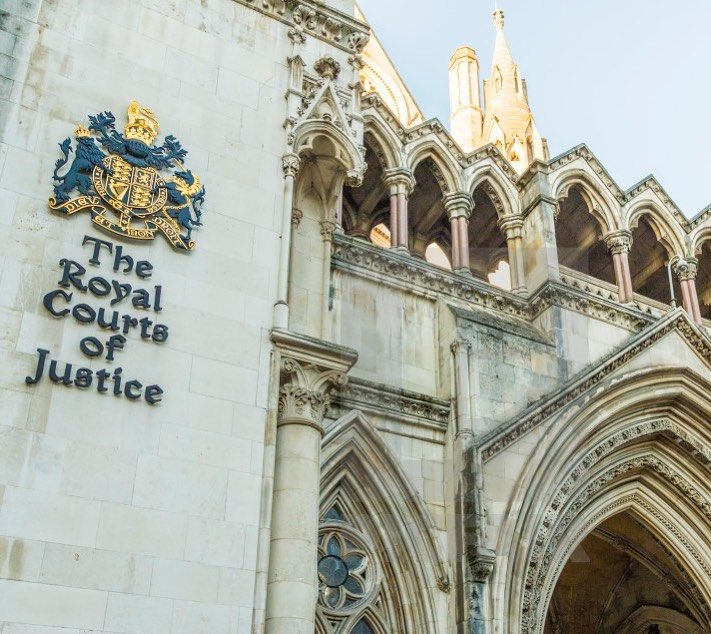
The Financial Conduct Authority faces a major legal battle over its £9.1 billion motor finance redress scheme, as the Upper Tribunal prepares to hear joint challenges from leading lenders and consumer groups. Scheduled between 16 and 26 February 2027, the landmark proceedings will determine whether the regulator's compensation framework stands or is quashed entirely.
The scheme, established under policy statement PS26/3 to manage fallout from undisclosed commission arrangements, remains partially suspended under a tribunal order of 2 July 2026 agreed between the FCA and four core challengers. Lenders are currently absolved from calculating or paying compensation, though the regulator requires them to maintain capital provisions against a baseline planning scenario in which the rules are entirely quashed.
The legal assault on the framework unites lenders Volkswagen Financial Services, Mercedes Benz Financial Services, and Crédit Agricole Auto Finance alongside consumer group Consumer Voice, represented by Courmacs Legal, all petitioning the tribunal to invalidate the rules. The FCA characterizes the dual-sided friction of these challenges as arguing that its methodology is simultaneously too generous to consumers and excessively harsh on lenders. Under the contested rules of PS26/3—which target discretionary commission arrangements, high commission tiers, and tied agreements—lenders must legally presume an unfair relationship under section 140A of the Consumer Credit Act 1974 wherever commissions lacked adequate disclosure.
To translate these legal presumptions into hard financial losses, the scheme mandates an APR adjustment calculation (such as a 17% benchmark for post-2014 agreements) to approximate overpaid interest.
The challengers argue that these mechanical loss formulas, alongside compensatory interest rates and restrictions on evaluating actual consumer detriment, infringe upon core balance-sheet protections, with one challenge invoking property rights under the Human Rights Act 1998. While the partial suspension pauses customer payout communications, firms must still preserve compliance workflows, gather historical data, and interface with the Financial Ombudsman Service.
If the tribunal ultimately quashes the framework, the FCA warns that the entire redress scheme will dissolve, reverting complaints to standard 8-week individual dispute windows and forcing institutions to hold strict capital and liquidity inside UK-regulated entities.
The uncertainty is already reshaping corporate valuations and balance sheets across the sector. Close Brothers Group PLC allocated an additional £164.7 million to its motor finance commission provisions during the year to 31 July 2026, pushing its total reserve pool to approximately £320 million. That buffer supported a CET1 capital ratio of 14.1%—up from 13.8% the previous year—prompting the group to scrap its final dividend for the 2026 financial year while awaiting the tribunal's verdict. While the FCA maintains that historical court rulings confirm lenders broke disclosure laws, a confirmed scheme could see payouts commence across 2027, whereas a successful judicial challenge or subsequent appeals could drag the dispute into 2028 and beyond.