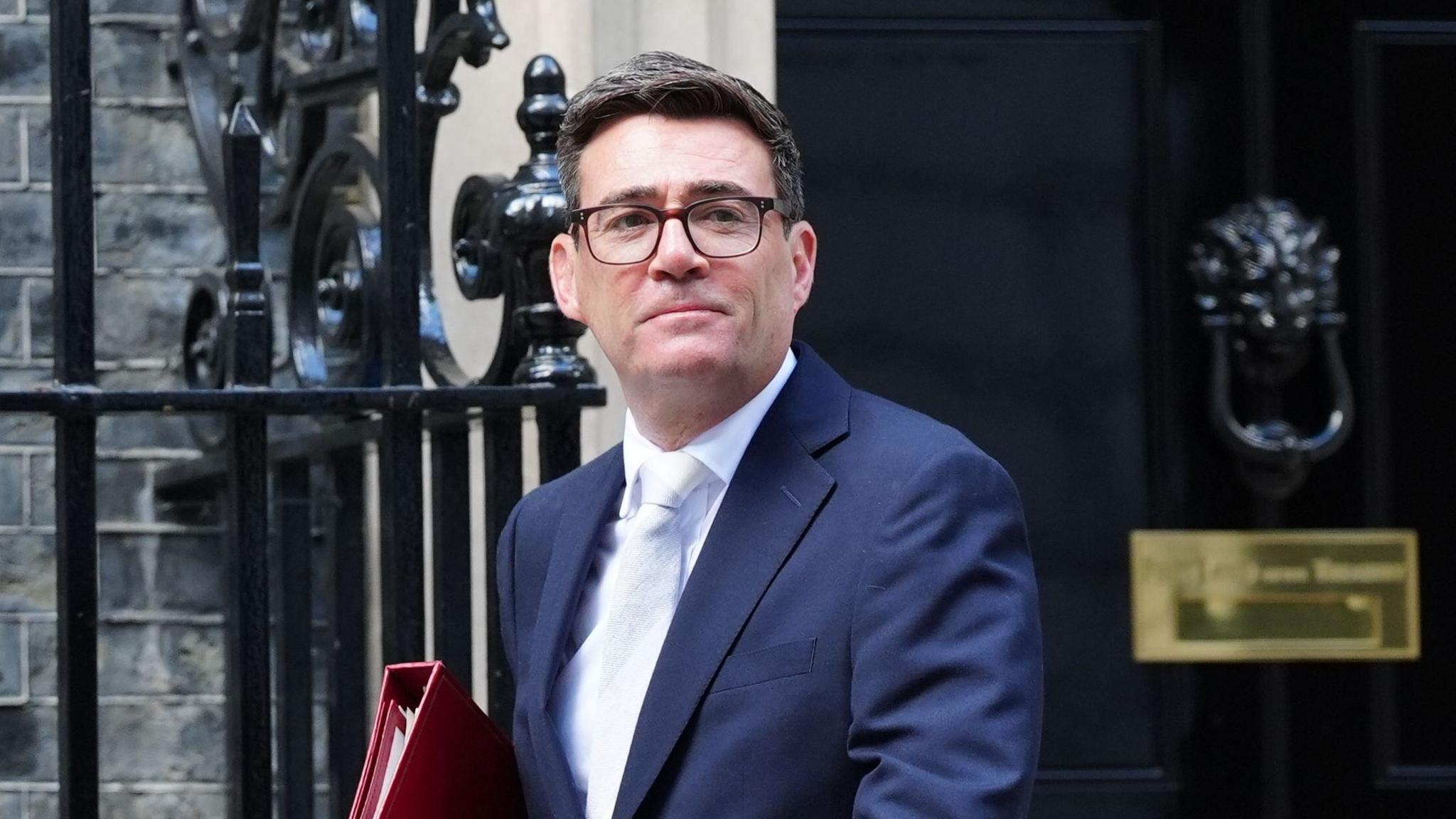
Andy Burnham is expected to receive approximately £174,039 a year in combined gross pay as the UK prime minister and an MP. That works out at roughly £14,503 a month before tax, National Insurance, pension contributions and charitable donations.
The maximum salary legally available is higher at £182,436. The difference arises because Burnham is entitled to an £83,837 prime ministerial salary but is reported to be claiming the lower amount of £75,440.
| Pay component | Annual amount for 2026/27 |
|---|---|
| Standard MP salary | £98,599 |
| Prime ministerial salary legally available | £83,837 |
| Prime ministerial salary reportedly claimed | £75,440 |
| Maximum combined entitlement | £182,436 |
| Expected combined gross salary | £174,039 |
| Approximate gross monthly salary | £14,503 |
These figures relate to the 2026/27 financial year. Expenses, official accommodation, security and government facilities are not included as personal earnings.
The prime minister’s pay has two components because the officeholder is also normally a Member of Parliament.
Every MP receives the standard parliamentary salary. The Independent Parliamentary Standards Authority, known as IPSA, set this at £98,599 from 1 April 2026.
The increase for 2026/27 comprised a 3.5% cost-of-living adjustment and a separate 1.5% benchmarking adjustment. IPSA, which operates independently of Parliament and the government, is responsible for determining MPs’ pay and pension arrangements.
A second salary is available for serving as prime minister. Under the Ministerial and other Salaries Act 1975 (Amendment) Order 2026, the Prime Minister and First Lord of the Treasury is entitled to an additional £83,837 a year.
Adding that entitlement to the MP salary produces maximum combined pay of £182,436. However, this is not necessarily what the officeholder collects.
Recent prime ministers have accepted a lower ministerial salary than the maximum permitted by law. Burnham is reported to be claiming £75,440 for his prime ministerial duties rather than the full £83,837 entitlement.
When the lower ministerial payment is added to the £98,599 MP salary, his expected gross annual pay is £174,039.
This distinction explains why different totals appear in published comparisons. A figure of £182,436 represents the maximum statutory entitlement, while £174,039 represents the expected amount claimed.
Burnham officially became prime minister on 20 July 2026, shortly after returning to the House of Commons as MP for Makerfield.
Burnham has pledged to donate 15% of his claimed prime ministerial salary to homelessness charities and related causes.
He made a similar commitment while serving as mayor of Greater Manchester and continued donating part of his income after returning to Parliament. The pledge does not alter the salary attached to the office: it is a personal donation made from his earnings.
The £174,039 figure should therefore be understood as Burnham’s expected gross official salary before that charitable commitment and other deductions.
The Prime Minister’s salary is taxable. The amount Burnham ultimately receives in his bank account will depend on income tax, National Insurance, pension contributions and the treatment of his charitable donations.
This is why a precise take-home figure can be misleading. The clearest like-for-like comparison is the gross annual salary of approximately £174,039, or around £14,503 a month.
Downing Street provides the prime minister with official working and residential accommodation, but it is not a personal property benefit that can simply be added to salary.
Number 10 is technically the official residence of the First Lord of the Treasury, an office conventionally held by the prime minister. Some previous officeholders have instead used the larger residential flat above Number 11.
The Prime Minister also has access to Chequers, the official country residence used for government business, meetings and periods away from Westminster. Staff, offices, official transport and security are supplied to enable the role to be performed rather than as ordinary employee perks.
The Ministerial Code requires ministers occupying an official residence to settle their personal tax liabilities, including any applicable council tax. They cannot also claim accommodation expenses through IPSA.
The prime minister can participate in the Ministerial Pension Scheme for the salary attached to the ministerial role. An active member contributes 11.2% of pensionable ministerial salary, according to information provided to Parliament in February 2026.
Separate pension arrangements apply to the salary received as an MP through the Parliamentary Contributory Pension Fund. A pension is therefore part of the overall remuneration arrangements, but it is not additional cash salary paid to the Prime Minister each year.
The Prime Minister receives more than the Chancellor, an ordinary Cabinet minister or the Leader of the Opposition, although the differences are relatively modest when compared with the overall level of parliamentary pay.
| Political office | MP salary | Additional statutory salary | Combined statutory pay |
|---|---|---|---|
| Prime Minister | £98,599 | £83,837 | £182,436 |
| Chancellor of the Exchequer | £98,599 | £75,170 | £173,769 |
| Cabinet minister in the Commons | £98,599 | £75,170 | £173,769 |
| Leader of the Opposition | £98,599 | £68,911 | £167,510 |
The table shows statutory entitlements. Amounts actually claimed may be lower where an officeholder waives or declines part of the additional salary.
Former prime ministers do not automatically continue receiving the prime ministerial salary after leaving office.
Those who remain active in public life may claim qualifying administrative expenses through the Public Duty Costs Allowance. The limit is £115,000 for 2026/27, but this is not a personal salary or a payment simply for having been prime minister.
The allowance reimburses eligible costs associated with continuing public duties, such as staffing, office administration and correspondence. Claims must relate to expenses actually incurred and cannot be used for private activities, parliamentary work or security.
The scheme applies specifically to former prime ministers. Other senior politicians, including Angela Rayner, do not qualify merely because they leave a Cabinet position, although serving MPs continue to receive their parliamentary salary and may receive other payments associated with an official role.
Holding ministerial office does not remove every private financial interest, but strict disclosure and conflict rules apply.
The Ministerial Code requires ministers to declare interests that could create, or appear to create, a conflict with their public duties. Those interests are reviewed with the relevant permanent secretary and the Independent Adviser on Ministerial Standards.
A prime minister who is also an MP remains subject to parliamentary registration requirements. Relevant earnings, gifts and financial interests must be disclosed where the applicable rules require it.
The straightforward answer is that Andy Burnham is expected to receive approximately £174,039 a year, including his MP salary and the lower prime ministerial salary he reportedly claims. His maximum legal entitlement is £182,436, but accommodation, security, official facilities and reimbursed expenses are not personal salary.