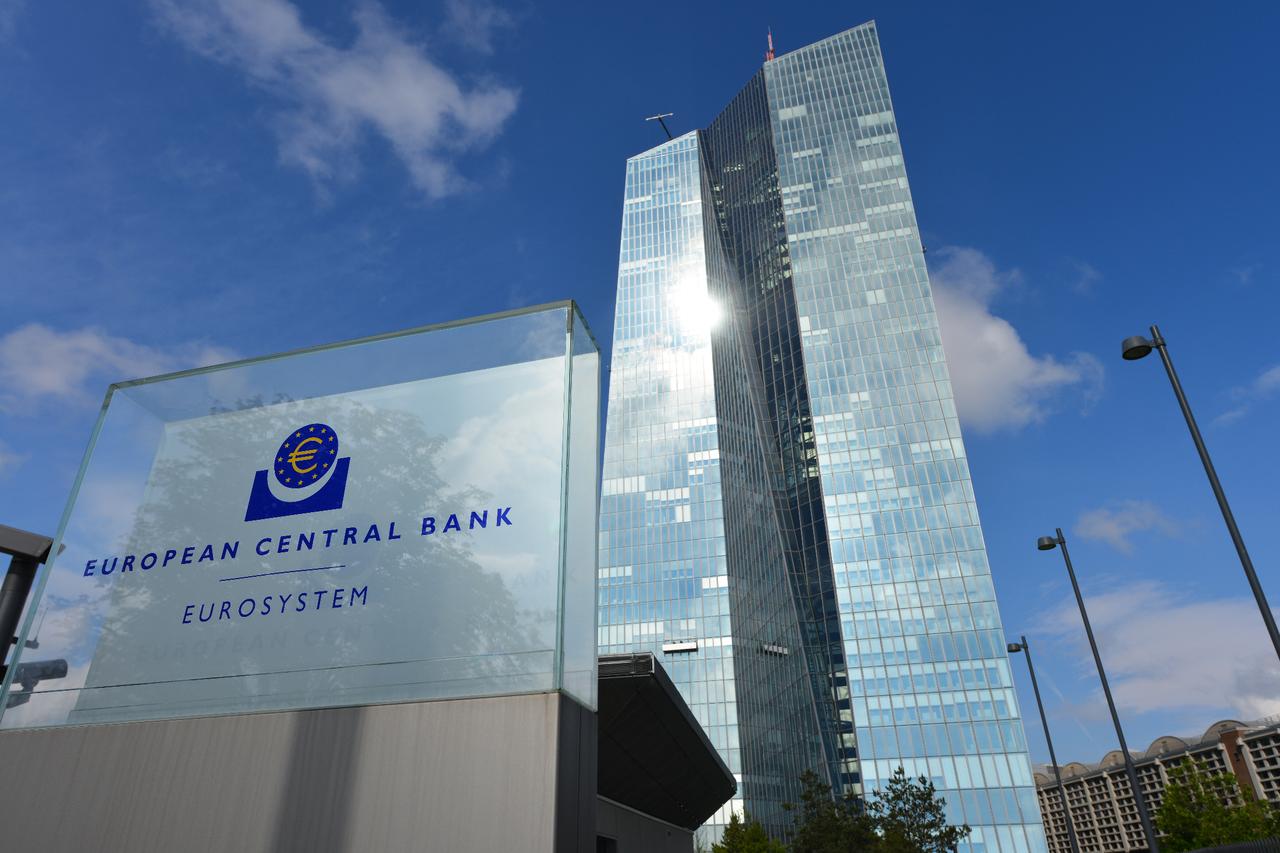
The European Central Bank’s deposit rate path depends on whether energy shocks translate into permanent domestic inflation, and how transmission lags affect leveraged corporate credit.
On 10 September 2026, the ECB raised its deposit facility rate by 25 basis points to 2.50% (effective 16 September). While financial markets immediately priced a trajectory moving toward 3%, matching terminal rate expectations against actual macroeconomic data requires examining how monetary policy transmits through wages, bank lending surveys, and secondary energy propagation.
The primary risk for the Eurozone is not an uncontrolled inflation spiral, but a prolonged structural squeeze: households and businesses absorbing structurally higher energy baseline costs while borrowing remains restricted by tight monetary policy.
September’s macroeconomic projections left headline inflation for 2026 unchanged at 3.0%, but shifted subsequent years upward. The revisions signal a slower convergence toward the 2% target.
| Metric (Annual Average) | June Projection | September Projection | Directional Shift |
| Headline Inflation (2027) | 2.3% | 2.5% | Upward revision |
| Headline Inflation (2028) | 2.0% | 2.1% | Above target |
| Core Inflation (ex. Energy/Food, 2027) | 2.5% | 2.6% | Sticky core path |
| GDP Growth (2027) | 1.2% | 1.4% | Resilient activity |
Source: ECB monetary policy macro projections. Figures represent annual averages.
This combination complicates the policy equation. Policymakers face a stickier inflation path, yet the 2026 growth forecast ticked upward to 0.9% alongside a higher 2027 projection. This economic resilience removes the argument that the Eurozone is too fragile to sustain current rates, while preventing a straightforward mechanical link between an energy shock and an automatic terminal rate ceiling of 3%.
Headline figures obscure underlying economic dynamics. Eurostat's August flash estimate placed headline inflation at 3.3% (spurred by energy jumping to 14.3%), but services inflation moderated from 3.3% to 3.0%, and core components excluding energy, food, alcohol, and tobacco eased to 2.4%. Prices are not accelerating uniformly across all sectors.
The ECB’s July wage tracker recorded negotiated pay growth (excluding one-off payments) at 2.6% for 2026, down from 3.8% in 2025, projecting 2.7% for the first quarter of 2027. However, this metric carries a structural limitation: it relies on existing collective agreements signed by early July, covering only 28.4% of employees in participating states for 2027. Agreements struck before a supply shock fail to capture subsequent worker compensation demands, presenting policymakers with an information lag.
The ECB’s second-quarter Bank Lending Survey reported a net corporate credit tightening standard of 7%. While indicating restrictive credit conditions, this reading fell well below the previous quarter’s 10% and the 19% tightening banks had originally anticipated. Corporate loan demand contracted less than projected, proving that monetary transmission is restrictive without causing an acute credit freeze.
Higher interest rates cannot repair a disrupted energy supply chain. Instead, rate policy acts on demand, credit creation, and inflation expectations to suppress second-round effects.
Direct vs. Indirect Effects: A one-off surge in energy commodity prices permanently raises the price level without automatically driving a continuous multi-year inflation cycle.
Propagation Risk: Propagation occurs when primary energy spikes bleed into transportation, industrial manufacturing overheads, corporate margin adjustments, and wage demands.
The Demand Destruction Counterweight: Higher utility and fuel bills drain disposable household and corporate liquidity, reducing discretionary spending capacity and limiting a firm's pricing power.
Tightening too aggressively risks compounding an existing income contraction; tightening too cautiously permits second-round wage-price spirals.
Market pricing around the September decision pointed toward a 3% deposit rate during the first half of 2027. By contrast, the ECB’s July Survey of Professional Forecasters envisaged a peak closer to 2.50% at the turn of 2026–27, assuming Brent crude baselines around $80.
Evaluating whether rates will reach 2.75% or 3.00% depends on specific forward-looking economic conditions:
| Scenario Condition | Underlying Market Trigger | Policy Implication |
| Shock Fades | Normalisation of oil/gas curves alongside softening core prints. | A prolonged pause becomes defensible; rate cuts are not automatic. |
| Persistence | Sustained cost pass-through and resilient domestic demand. | Further benchmark hikes followed by an extended plateau. |
| Broadening Shocks | Services inflation re-accelerating alongside aggressive wage prints. | Terminal rates exceed 3.0% as medium-term expectations unanchor. |
| Demand Collapse | Accelerated contraction in activity and tighter lending standards. | Policy loosening occurs earlier than consensus pricing suggests. |
For corporate and retail borrowers navigating refinancing windows, duration matters as much as the terminal rate peak.
Variable-Rate Exposure: As a technical illustration, a 50-basis-point pass-through on 1,000,000 euros of unhedged variable-rate debt increases annual interest expense by 5,000 euros, assuming the principal balance remains static across a full 12-month cycle.
Fixed-Rate Insulation: Fixed-rate debt structures isolate corporate balance sheets from immediate policy shifts, delaying the transmission of higher refinancing costs over multi-year debt maturities.
No. Fixed-rate debt instruments maintain their contracted coupon until maturity. Variable-rate debt and new credit originations reprice in alignment with short-term money market benchmarks tied to the deposit facility rate.
The central bank cannot alter global commodity supply, but it uses policy levers to prevent primary energy inflation from propagating into a permanent wage-price spiral across domestic services and manufactured goods.