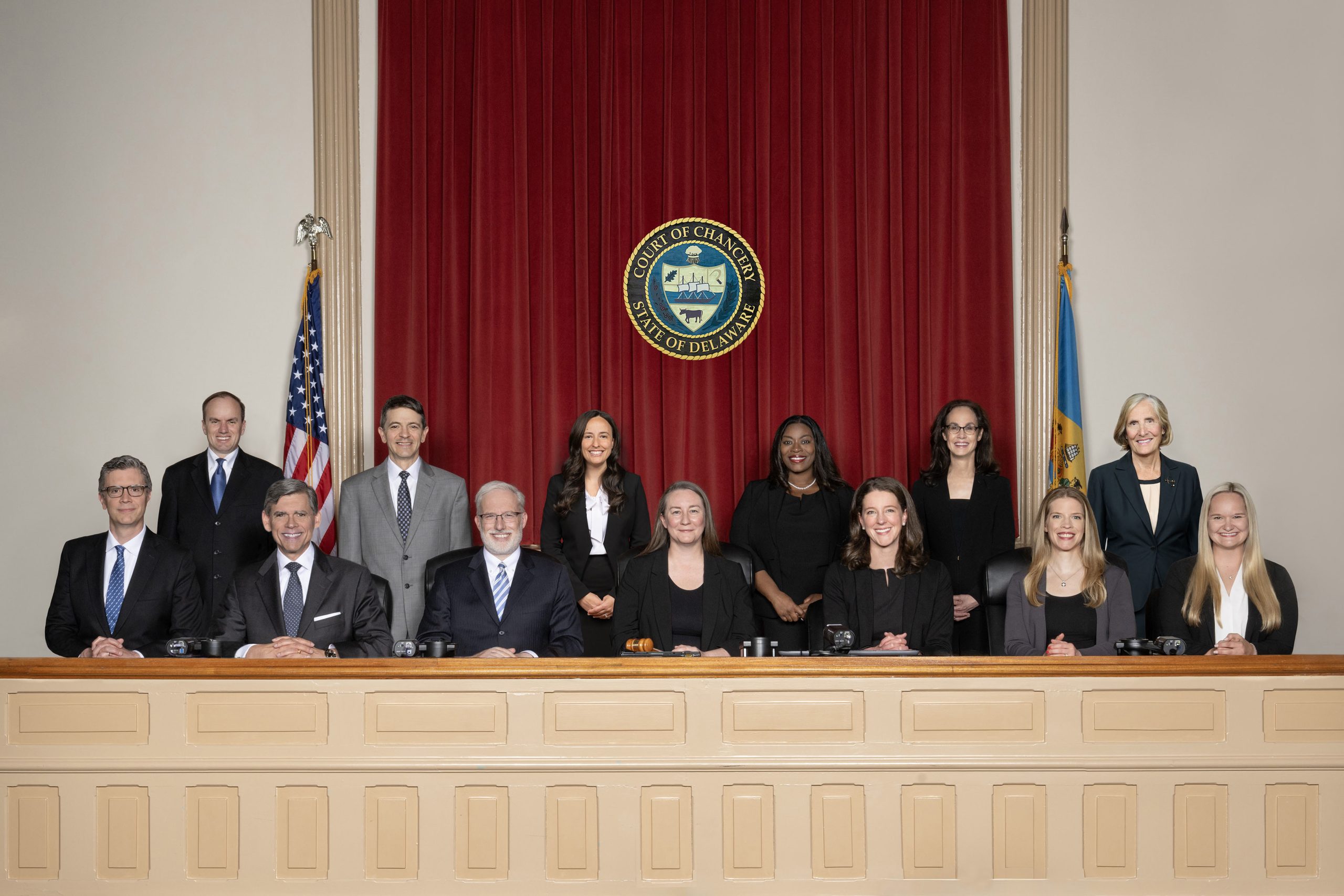
The Delaware Court of Chancery has rejected Gregory Freiberg’s attempt to overturn his removal from the board of Xonar Technology, ruling that stockholder consents obtained after the company first treated him as removed could still be counted toward the corporate action.
The September 15 decision gives a useful interpretation of Delaware’s written-consent rules. Chancellor Kathaleen McCormick held that consents supporting the same stockholder action can be executed on different dates within the 60-day period allowed by Section 228 of the Delaware General Corporation Law, while a company’s belief that it already has sufficient votes does not, by itself, close that process.
That conclusion was enough to decide Freiberg’s expedited Section 225 challenge because he had acknowledged that he needed to prevail on both issues before the court. Once he failed to exclude the later consents, the court did not need to determine the separate dispute over how his share ownership should be calculated.
Xonar develops artificial intelligence-powered event-security systems. Freiberg invested in several of the company’s fundraising rounds before joining the business in 2023 as President and Chief Development Officer, with compensation that included common stock, options and a board seat.
The relationship subsequently deteriorated amid disagreements over Freiberg’s equity position, dilution, proposed governance changes and company fundraising. Those tensions intensified in 2025 as Xonar worked to clean up its capitalization table ahead of potentially seeking venture capital investment, while Freiberg challenged a preferred-to-common stock conversion and later made a books-and-records demand under Section 220 of the DGCL.
On January 5, 2026, a group of Xonar stockholders executed written consents seeking to remove Freiberg from the board. Xonar considered the action effective immediately and notified stockholders the following day that a majority had approved the removal.
Freiberg challenged that position under Section 225, arguing that Xonar’s capitalization table understated his ownership and that the January 5 signatories therefore lacked the voting power required to remove him. Although the company continued to maintain that the original consents were sufficient, it also sought additional support from long-standing investors Brian and Jeff McFadden, who undisputedly owned a combined 132,158 common shares.
Both signed additional consents on January 27, creating the issue that ultimately decided the case: whether those later consents could be considered alongside the January 5 consents.
Freiberg argued that Xonar had effectively completed the stockholder action on January 5 when it treated him as removed. On that analysis, obtaining additional consents on January 27 amounted to a separate stockholder action that could not be combined with the original vote.
The Court of Chancery rejected that premise. Section 228 allows stockholders to act by written consent instead of holding a meeting and, where an action is taken using multiple consents, the statute does not require every stockholder to sign on the same date. Instead, sufficient consents must be delivered within 60 days of the first delivered consent.
The distinction between a written-consent process and an actual stockholder meeting was central to the court’s reasoning. Freiberg effectively argued that Xonar had conducted the equivalent of a meeting on January 5, closed it and later conducted another when the McFaddens signed, but written consents operate “in lieu of” a meeting rather than as one.
The court found no statutory or case-law basis for treating consents covering the same corporate action as separate votes simply because they were executed on different dates within the statutory period. Xonar’s position that Freiberg had already been removed therefore did not prevent the later McFadden consents from being considered.
Freiberg also argued that the later consents were effectively backdated because Xonar had originally described his removal as effective on January 5. The court disagreed, noting that the McFadden documents did not themselves state January 5 as their effective date.
More importantly, the court distinguished the date appearing on an individual consent from the date on which the underlying stockholder action becomes legally effective. Where several written consents are needed, the action does not become effective until enough have been delivered to satisfy the required voting threshold.
The court therefore treated the relevant action as becoming effective no later than January 27, rather than giving the later consents retroactive force from January 5. That distinction is useful for Delaware companies because an earlier consent can remain valid even though the corporate action it supports is not yet effective.
Additional valid consents can still contribute to the same action while the Section 228 period remains open, meaning an initial voting shortfall does not necessarily invalidate the earlier consents themselves.
Freiberg had a third route to excluding the January 27 votes, arguing that the McFaddens’ consents had been obtained through fiduciary breaches. His case included alleged misleading statements and failures to disclose information concerning his removal and the wider disputes with Xonar.
Delaware law can permit a court to disregard otherwise valid votes where fiduciary breaches have materially tainted the stockholder process, but the burden on the party challenging those consents is substantial. Here, the court found that Freiberg had not identified a material omission sufficient to justify excluding the McFaddens’ votes.
The two investors had already received notice that Xonar considered Freiberg removed, and when the company later approached them for additional support they were told that he was challenging that removal. Their evidence also did not establish that the further information identified by Freiberg would have materially changed their decision.
The court reached the same conclusion on the allegation that Xonar had inaccurately told the McFaddens that a majority had already supported Freiberg’s removal. Freiberg failed to demonstrate that the statement materially affected their decision to sign, while his separate contention that they had been improperly induced by suggestions concerning future liquidity or M&A treatment was also unsupported by the record.
The McFadden consents therefore remained part of the stockholder action.
The capitalization dispute initially appeared capable of becoming the central issue in the litigation, but Xonar narrowed the Section 225 proceeding by agreeing, for the purposes of the case, to assumptions favourable to Freiberg on several disputed capitalization points.
The Court of Chancery then confined the trial to two issues: whether the McFadden consents could be counted and how Freiberg’s share ownership should be calculated. Freiberg expressly accepted that he had to prevail on both, so once he failed on the consent issue the court had no need to determine the ownership methodology.
That is an important limitation on the judgment because it does not amount to a broader judicial endorsement of Xonar’s capitalization table or resolve every dispute between Freiberg and the company. Freiberg has brought a separate action containing claims for breach of contract, fraud, tortious interference, conversion and other matters, all of which fell outside the narrow Section 225 proceeding.
The procedural reasoning is almost as important as the written-consent analysis. Freiberg had sought extensive discovery concerning Xonar’s capitalization, governance decisions, option grants and potential corporate transactions, but the court refused to turn the case into a wider investigation of those disputes.
Section 225 is designed to provide a fast mechanism for determining who is validly serving as a corporate director or officer, preventing a Delaware corporation from being left in prolonged uncertainty over who controls its board. That expedited process comes with a correspondingly narrow scope.
The court therefore rejected Freiberg’s attempt to reopen broader discovery, noting that claims concerning fiduciary breaches, contractual rights and other alleged wrongdoing could be pursued separately. For companies and directors, the distinction is practical: choosing an expedited Section 225 proceeding provides speed on board-status questions, but it does not automatically create a forum for resolving every underlying governance dispute.
The decision provides a clear warning against treating a company’s internal announcement of a result as the legal endpoint of a written-consent process. Under the court’s interpretation of Section 228, the critical issue is whether sufficient valid consents supporting the corporate action are delivered within the statutory period, even where those consents are signed on different dates.
Companies should therefore distinguish carefully between believing that a voting threshold has already been achieved and the point at which sufficient votes have actually been delivered to make the action effective. The judgment also demonstrates the limits of challenging consents on equitable grounds, because allegations of incomplete disclosure or misleading solicitation are not enough without evidence of materiality sufficient to justify setting otherwise valid votes aside.
For Xonar, the immediate result is that Freiberg failed to prove that his removal was improper and judgment was entered for the company. The decision does not resolve the disputed calculation of his share ownership or the broader claims being pursued separately.
The court also denied Xonar’s attempt to recover its legal fees. Although it criticised aspects of Freiberg’s approach to the expedited proceedings, it found that his conduct did not meet the bad-faith threshold required for fee shifting.
A company’s belief that a written-consent action has already succeeded does not necessarily end the statutory consent process. Under the court’s application of DGCL Section 228, additional consents supporting the same action may still be counted if delivered within the permitted 60-day period.
A written consent can remain valid even though the corporate action it supports is not yet effective. The action becomes effective when enough qualifying consents have been delivered, creating an important distinction between an insufficient vote at an earlier date and an invalid consent.
An expedited Section 225 proceeding is designed to determine who validly holds corporate office, not to resolve every related governance or fiduciary dispute. Parties using that procedure gain speed but may have to pursue broader contractual, fraud or fiduciary claims separately.
A party seeking to invalidate stockholder consents on fiduciary grounds must establish materially misleading disclosure or another equitable defect sufficient to taint the vote. Allegations of incomplete information are insufficient without evidence that the information would have materially altered the stockholders’ decision-making.