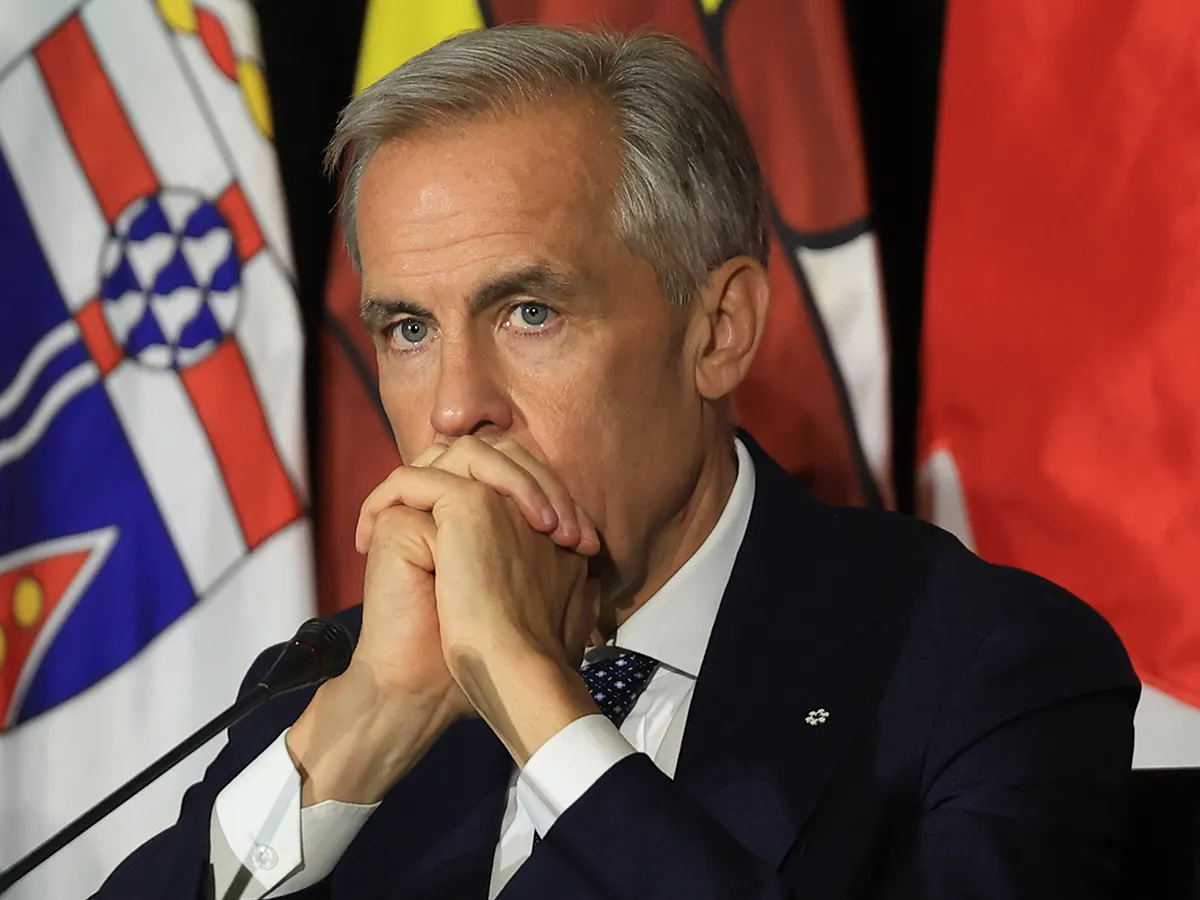
Prime Minister Mark Carney has kept Canada’s response options open if President Donald Trump’s threatened 50% tariffs on Canadian goods take effect on Aug. 19, while negotiations with the United States continue over a broader trade agreement.
Carney said the federal government is intensifying talks and does not intend to respond before the tariff deadline. He described an early countermeasure as potentially counterproductive and said all options remain available if an agreement is not reached. The position creates a short negotiating window in which export exposure and investment assumptions remain unsettled.
The announced tariffs cover honey, liquor, cement, dairy products, some wood products, hockey sticks and other goods. Energy products, potash, fish and critical minerals are excluded. The measures would also apply to goods previously protected by the United States-Mexico-Canada Agreement, or USMCA. The 2020 trade pact was not renewed by the United States, triggering negotiations that could continue until 2036.
An analysis by Desjardins estimated that the tariffs would affect about $28 billion Canadian ($19.8 billion) of annual Canadian exports to the United States. That represents about 5% of total US imports from Canada each year. Desjardins also warned that uncertainty surrounding the negotiations could weaken business confidence and delay investment plans, extending the impact beyond the products directly covered by the tariff list.
Ontario, Quebec and British Columbia were identified as the provinces facing the greatest exposure. Ontario Premier Doug Ford said Canada needed a stronger negotiating stance and left open the possibility of a surcharge on electricity sold by Ontario to the United States, depending on how talks develop. Prince Edward Island Premier Rob Lantz said the provinces, territories and federal government remained aligned behind a unified Canadian position.
Carney also said Canada would continue strengthening its domestic economy and expanding trade relationships beyond the United States regardless of the outcome of the current negotiations. That position connects the immediate tariff dispute with longer-term trade diversification and investment planning, while preserving the option of responsive measures if the United States action proceeds.
The Trump administration later included Canada among countries facing tariffs linked to forced labour in supply chains. Canada-US Trade Minister Dominic LeBlanc said the move did not come as a surprise and that Canada shared the objective of preventing goods produced with forced labour from entering supply chains. He said engagement with the United States would continue on that issue and other unresolved matters.
The Aug. 19 deadline is now a central planning point for exporters, provincial governments and businesses exposed to cross-border trade. Until the negotiations produce an agreement or the tariffs take effect, budget and investment planning remains dependent on whether Canada responds and which measures it selects.