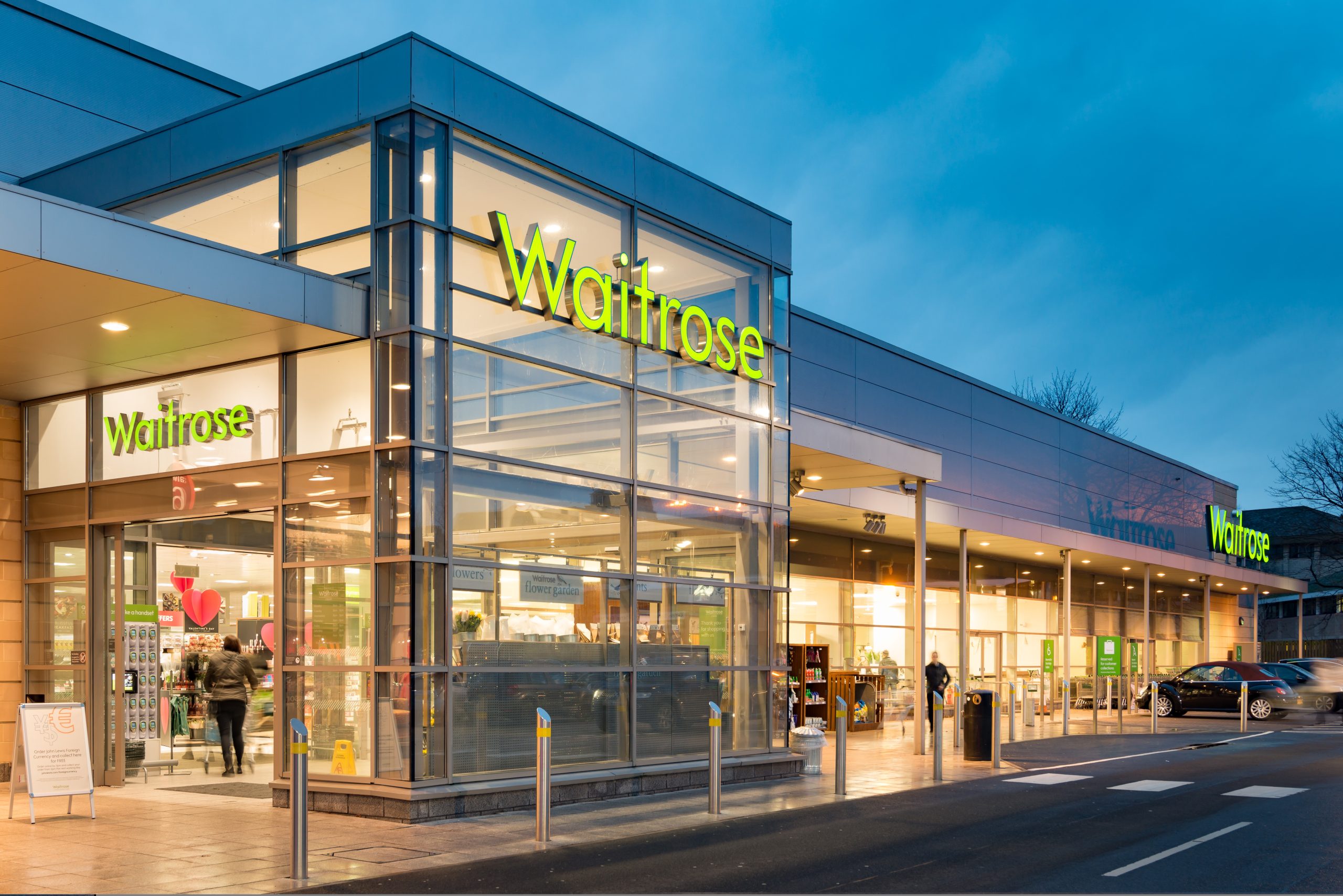
John Lewis Partnership reported a £124m pre-tax loss for the first half as rising costs and weaker spending on big-ticket purchases weighed on the employee-owned retailer.
The Partnership, which owns Waitrose and John Lewis, recorded a headline loss before tax and exceptional items of £89m for the six months to 1 August, compared with £34m in the equivalent period last year. On a statutory basis, the pre-tax loss widened from £88m to £124m.
The deterioration came despite Partnership sales increasing 2% to £6.3bn, with markedly different performances across its two main retail brands. Waitrose sales increased 4%, while John Lewis sales declined 2% as customers became more cautious about discretionary purchases including furniture and electrical goods.
That contrasts with the Partnership's previous full-year performance. For the 53 weeks to 31 January 2026, Partnership sales increased 5% to £13.4bn, while profit before tax, Partnership Bonus and exceptional items rose 6% to £134m. Operating cash flow increased by £63m to £595m and liquidity strengthened to £1.6bn.
The latest £89m headline first-half loss is therefore £55m larger than the £34m loss recorded at the same stage last year, a Finance Gazette calculation based on the reported figures.
The Partnership attributed the first-half performance to a combination of continued investment, tougher trading conditions in general merchandise and increased operating costs. Employment costs have risen following higher employer National Insurance contributions, while JLP has continued investing in technology and its retail operations.
Those cost pressures were already visible in its previous annual results. JLP said its 2025/26 performance absorbed £53m of additional taxation costs, comprising £40m from higher National Insurance contributions and £13m from the Extended Producer Responsibility packaging levy.
The divergence between Waitrose and John Lewis is particularly important heading into the second half. Waitrose entered the current financial year after increasing full-year sales by 7% to £8.5bn, with adjusted operating profit rising £29m to £256m. The supermarket business has also continued investing in expansion, including a £1bn multi-year programme covering stores, online operations and additional retail channels.
John Lewis faces greater exposure to purchases that households can postpone when confidence weakens. The Partnership's latest results indicate that this difference in spending behaviour is now producing a widening performance gap between its grocery and general merchandise operations.
Chairman Jason Tarry nevertheless expects the Partnership to deliver a profitable full year, with the second half encompassing the important Christmas trading period.
The Partnership also entered the current year with substantial financial headroom. At the end of 2025/26, JLP reported total liquidity of £1.6bn, up from £1.5bn a year earlier, including a renewed £460m undrawn revolving credit facility. It said that position allowed it to continue self-funding its long-term investment programme.
The first-half results therefore show two distinct pressures. Costs have increased across the Partnership while weaker discretionary spending has hit John Lewis more directly than Waitrose. With Waitrose still growing and JLP retaining significant liquidity, the second half will determine whether the Partnership can convert that resilience into the full-year profitability management expects.