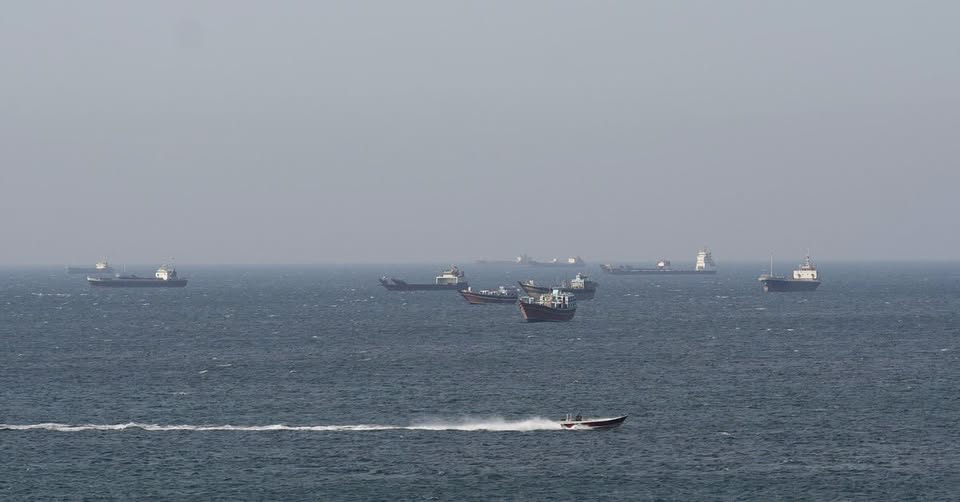
The U.S. and Iran exchanged fresh strikes over the weekend as Brent crude topped $97 a barrel, renewing concerns about prolonged oil-supply disruption.
Brent traded above $97 a barrel in early European trading, gaining 0.8% to $97.05, while WTI advanced 0.6% to $91.99. Renewed strikes between the U.S. and Iran added to concerns about oil-supply disruption.
ING said the oil market remained well supported and saw little indication of peace between the two countries. The firm also noted that speculators became more bullish on Brent last week as renewed tensions increased concerns about supply disruption continuing for longer.
The change in net-long positioning was driven mainly by short covering. This suggested that traders were largely closing bearish positions instead of making aggressive new wagers on further price gains. The positioning therefore reflects reduced bearish exposure rather than an unequivocal commitment to a sustained rise in Brent.
Goldman Sachs presented a conditional scenario in which further attacks on Middle Eastern shipping could take Brent to $120 a barrel. Daan Struyven, the firm’s co-head of global commodities research, identified the possible broadening and intensification of shipping disruption as an important risk.
That projection was not presented as a confirmed price outcome. It depended specifically on attacks against shipping increasing, leaving the potential price movement tied to the course of disruption in the region.
Goldman Sachs outlined a contrasting scenario in which regional exports return to normal, putting Brent at $80 a barrel—a level it linked to OECD commercial inventories.
The conditional nature of both scenarios leaves oil-related financial planning dependent on two unresolved developments: whether attacks on shipping intensify and whether regional exports normalise. Budgets and liquidity assumptions linked to Brent consequently remain exposed to movements away from its current level.
The market positioning described by ING adds a further qualification. Although speculators had become more bullish, the movement resulted mainly from the closure of bearish bets rather than aggressive new positions anticipating higher prices. That distinction affects how the positioning can be incorporated into short-term risk assumptions.
Brent’s move above $97 establishes the immediate market development, while the Goldman Sachs scenarios define possible outcomes under different supply conditions. Until the direction of shipping disruption and regional exports becomes clearer, oil-related budgets, liquidity requirements and risk controls remain subject to the conditional price outcomes identified by Goldman Sachs.




