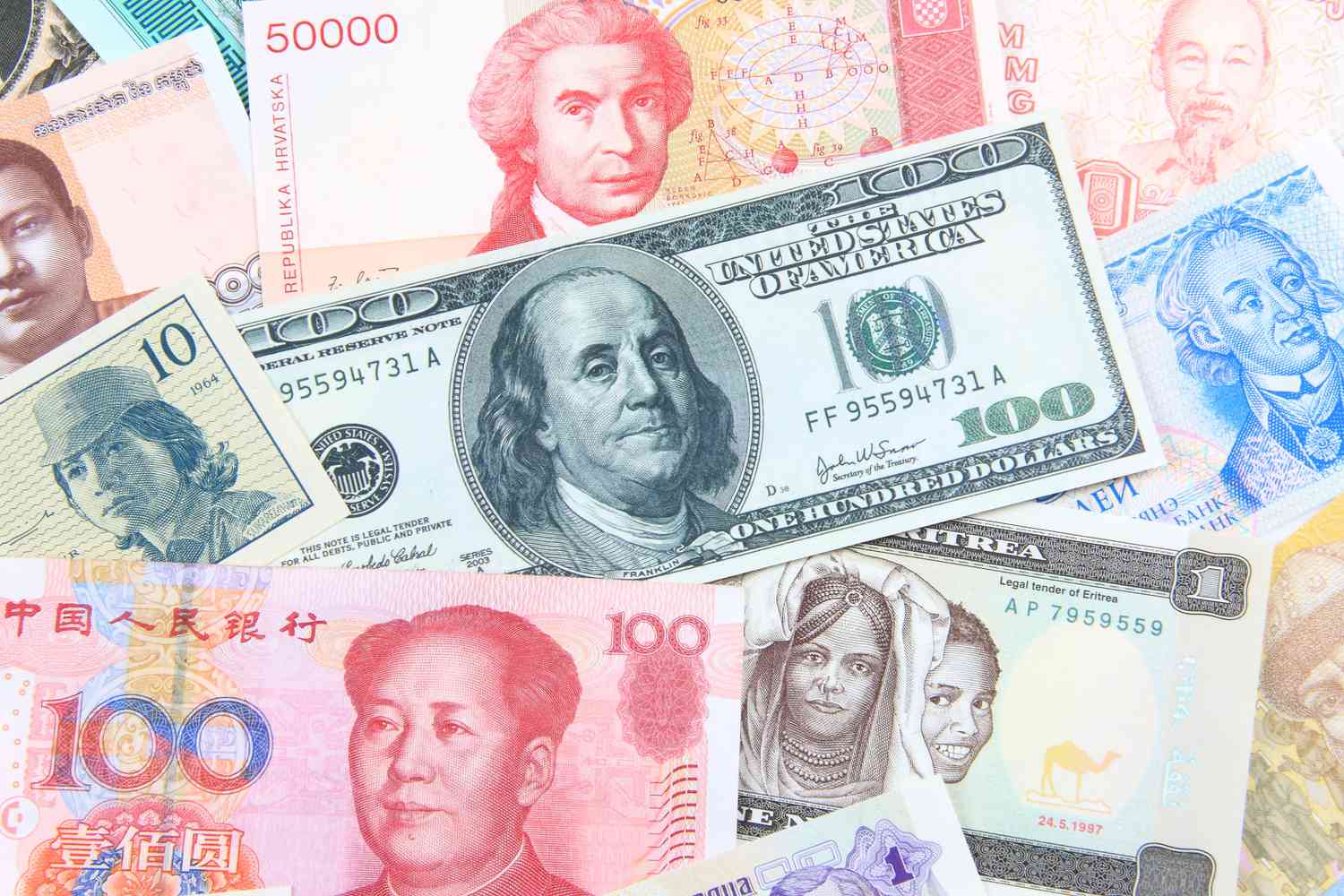
Currency intervention is a direct purchase or sale of a currency by a government or central bank, aimed at influencing its exchange rate. Currency manipulation is a specific, contested subset of that activity: intervention judged by other governments to be an unfair attempt to gain a trade advantage rather than to correct a market disruption. The two terms describe the same mechanical action, a state buying or selling currency, but differ entirely in intent and in how other countries respond to them.
Central banks intervene for a narrow set of reasons: to counter disorderly trading conditions, to prevent a currency swing that threatens financial stability, or to signal that an exchange rate has moved away from what the country's economic fundamentals justify. The Federal Reserve Bank of New York, which executes US intervention on behalf of the Treasury and the Federal Open Market Committee, frames its role around countering disorderly market conditions rather than pursuing a target exchange rate.
Manipulation describes the same tool used for a different purpose: deliberately weakening a currency to make exports cheaper and imports more expensive, giving a trade advantage that other countries did not agree to. Because the underlying transaction looks identical from the outside, the label a country applies often depends on whether trading partners view the move as defensive or opportunistic.
When the New York Fed intervenes to support the dollar, its trading desk buys dollars and sells the relevant foreign currency. To weaken the dollar, it does the reverse. The foreign currency used has historically been drawn from reserves held jointly in the Fed's System Open Market Account and the Treasury's Exchange Stabilization Fund, currently held in euros and yen. Interventions are often coordinated with the central bank of the other currency involved, since a joint move carries more weight with traders than either country acting alone.
Japan's central bank describes its own interventions in similar terms: operations conducted to correct rapid or excessive currency swings and stabilize rates, rather than to fix the yen at a chosen level.
Three factors tend to separate the two in practice:
The US Treasury maintains a formal monitoring process for this reason, publishing a semiannual report that reviews the foreign exchange practices of major trading partners against quantitative thresholds, including the scale and persistence of one-sided currency purchases.
No major US trading partner has been formally designated a currency manipulator since the standard was tightened in 2015. Instead, Treasury maintains a "Monitoring List" of economies whose currency and macroeconomic policies warrant closer attention without meeting the full statutory bar. In its July 2026 semiannual report to Congress, Treasury kept ten economies on that list: China, Japan, Korea, Taiwan, Thailand, Singapore, Vietnam, Germany, Ireland, and Switzerland, unchanged from January 2026.
Landing on the list is not the same as being labelled a manipulator. Designation requires meeting three statutory criteria at once: a bilateral trade surplus with the US above a set threshold, a current account surplus above a set share of GDP, and persistent, one-sided currency purchases above a set share of GDP over time. Treasury's July 2026 report found no trading partner met all three simultaneously, though analysis by ING Think estimated that Taiwan, Switzerland, and Thailand each met the trade and current-account criteria while staying below the intervention threshold, illustrating how a country can trip two of the three tests without crossing into designation. China was singled out separately in the July report, not for meeting the criteria but for comparatively limited transparency around its exchange rate practices, with Treasury noting this would not stop a future designation if evidence of deliberate RMB intervention emerged.
Formal manipulator designations are rare enough that the most recent one remains the clearest reference point for what the label actually triggers. Treasury designated China a currency manipulator on August 5, 2019, after the People's Bank of China allowed the yuan to weaken following new US tariffs, the first time the label had applied to any country since 1994. That designation rested on the older, more subjective standard in the 1988 Trade Act rather than the newer 2015 quantitative criteria, since no economy had actually breached all three current thresholds at the time.
The designation lasted five months. Treasury reversed it on January 13, 2020, two days before the signing of the US-China "Phase One" trade agreement, after China committed to refrain from competitive devaluation and to publish more data on its currency practices. The episode shows that a manipulator designation, in practice, has functioned less as a mechanical trigger from the quantitative criteria and more as a diplomatic tool that can be applied and lifted alongside broader trade negotiations.
The distinction was visible again in the yen market in the closing days of July 2026. After the yen weakened to its lowest level against the dollar since 1986, the Bank of Japan bought yen to slow the decline. Days later, the New York Fed carried out its own yen purchases on behalf of the US Treasury, the first such US intervention to support the yen since 1998, following an earlier 2011 intervention that ran in the opposite direction, weakening the yen after the Tohoku earthquake. Because the moves were coordinated between the two countries rather than conducted by Japan alone, market strategists characterized the action as tacit, mutually agreed support rather than a unilateral attempt to gain a trade edge, the kind of coordination that typically keeps an intervention out of manipulation territory.
Currency intervention is the transaction. Currency manipulation is a judgment about that transaction's purpose, made by other governments and typically by reference to how often it happens, how visible it is, and whether other countries were part of the decision. The 2019 China case and the 2026 yen case sit at opposite ends of that spectrum: one an isolated, contested designation applied and then lifted as part of trade diplomacy, the other a coordinated move that both sides treated as mutual support. The same central bank action can sit on either side of the line depending on those factors, which is why identical-looking trades by different countries can produce very different diplomatic reactions.